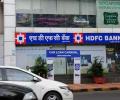
HDFC Bank on Wednesday reported a 2.3 per cent year-on-year rise in its consolidated net profit to Rs 17,657 crore for the October-December quarter, restricted by slower loan growth. On a standalone basis, the largest private sector lender's net profit came at Rs 16,735.50 crore for the period, up from Rs 16,372.54 crore in the year-ago period, but marginally down from the preceding quarter's Rs 16,820.97 crore.

Visuals of Jammu and Kashmir Chief Minister Omar Abdullah scaling the gate of the Naqshband Sahib graveyard and jostling with securitymen deployed there have gone viral.

'The EPS camp feels assertiveness will help the AIADMK keep the BJP's seat-share ambitions to the minimum,' observes N Sathiya Moorthy.

After a year of decline, mergers and acquisitions (M&As) in India increased 13.8 per cent, reaching $69.2 billion in the first nine months of 2024, as against $60.8 billion during the same period in 2023. Led by Indian companies and private-equity (PE) firms, 2,301 transactions were signed between January and September this year as compared to 1,855 transactions reported in the same period last year, according to the Bloomberg data.
LIC public offer, the country's biggest-ever IPO, on Wednesday opened for subscription for retail and institutional investors. The government aims to generate about Rs 21,000 crore by diluting its 3.5 per cent stake in the insurance behemoth. The LIC initial public offering (IPO), now open for retail and institutional investors, is set to close on May 9. LIC has fixed the price band at Rs 902-949 per equity share for the issue.

Manas Sood, a Class 12 student from the Delhi Public School, has distributed 2,650 boxes of Tax City Education and empowered over 12,000 students from 52 schools across India. His aim? To help young Indians understand taxes and become financially literate.

'Sell in May, go away' is a popular market adage. But 'Don't sell any new shares in May' is the best kept secret of Dalal Street that's set to break. Sample this: the last four General Election election cycles starting 2004 have not seen a single initial public offering (IPO) launch during the month of May.

'Once bitten, twice shy, I didn't take up the challenge this time...' 'I realised I had failed to follow my karma because I feared failure.'
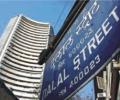
With new eligibility criteria for futures and options (F&O) coming into effect, Jio Financial Services and Zomato are strong contenders for inclusion in the derivatives segment, according to an analysis by Nuvama Alternative & Quantitative Research. The report suggests that these new F&O inclusions could also propel these two companies into the benchmark National Stock Exchange Nifty 50 during the March rebalancing.

Prices for Indian consumers are expected to come down significantly from the current Rs 17,000-Rs 26,000 monthly.

Despite facing financial constraints, Kerala has been able to invest in welfare schemes and targeted programmes.
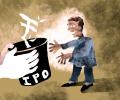
The IPO filing-to-approval lapsing ratio this year is the best in three years, underscoring the improvement in the IPO market's buoyancy.

MLAs cutting across party lines spoke about Thursday's clash, and expressed concern over overcrowding in the legislature premises.
'Entering India is exciting, but it's also challenging. You have to be prepared for long-term investment.'

India's largest insurer LIC is likely to list on the stock exchanges on May 17, a week after its bumper initial public offering (IPO) closes. The government is selling over 22.13 crore shares in LIC at a price band of Rs 902-949 a piece in the initial public offering, which opens on May 4 and closes on May 9. As per the final papers filed with Sebi, the allotment of shares to the demat account of bidders will happen by May 16, post which LIC would commence trading of equity shares in the stock exchanges and list "on or about May 17".

Digipin promises to revolutionise location-based services in India with safeguards.

Lavasa Corporation, the real estate arm of Hindustan Construction Company (HCC), filed a draft prospectus with the Securities and Exchange Board of India for an initial public offer (IPO), even after several developers have been keeping similar plans, after filing these, on hold for several months.
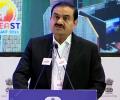
The Adani Group plans to invest a record $15-20 billion across businesses over the next five years to chart out the next phase of growth, chairman Gautam Adani said on Tuesday as he touted the conglomerate's strong balance sheet and robust business to shrug off relentless scrutiny it faces. Record earnings from the businesses ranging from seaports to airports, renewable energy parks to data centres, cement to gas and electricity has built India's largest infrastructure group that not only exists just to serve the markets but to serve the nation's destiny, he said.

TCS's mcap crossed $100 billion in 2018, 13.5 years after the IPO. It took only four more years to double its mcap to $200 billion.
'Raising the entire amount in one go may not be prudent, given the market dynamics.'

Notwithstanding the ongoing decline in equity markets week after week, August has proven to be the most successful since December for initial public offerings (IPOs). In August of this year, six companies have collectively raised approximately Rs 4,269 crore through IPOs.
Google Inc priced a follow-up stock offering of 14.16 million shares at $295, offering investors a slight discount from the online search engine leader's recent market value.

Drawing lessons from security protocols of Parliament, the state is working closely with agencies like the Defence Research and Development Organisation and the Electronics Corporation of India Ltd to design a multi-layered safety mechanism.

From tackling visa woes to admission counselling, rediffGURU Dr Karan Gupta helps you choose the right course and country to study abroad.

Prime Minister Narendra Modi's energy, dynamism and willingness to engage remains a 'prime asset' for India on the global stage but deserves greater backing, Congress MP Shashi Tharoor said on Monday, in remarks that are likely to irk his party and widen the growing cracks in his ties with its leadership.

Equity supply may hit Rs 6 trillion soon.

Adarsh Kumar, the son of a farmer and a Class 12 student from rural Bihar, is on a mission to build one of India's largest free skill development movements, powered only with a laptop, free Internet and his relentless determination.
Fundraising via the initial public offering (IPO) route by companies may touch Rs 1 trillion in financial year 2024-25 (FY25), according to a recent note by Pantomath Group - a mid-market investment bank. During the financial year 2023-24 (FY24), 76 companies tapped the markets through mainboard IPOs, Pantomath said, raising nearly Rs 62,862 crore. This is a 21 per cent rise compared to FY23, the note added.

Flush with funds, quick commerce unicorn Zepto is planning to relocate from Powai in Mumbai to a larger office space in Bengaluru's Sarjapur to accommodate its imminent new hires. While the company will maintain an office in Mumbai, its primary operations will shift to the new space in Bengaluru. A spokesperson for Zepto confirmed the development

Stock market investors became richer by a whopping Rs 77.66 lakh crore in 2024, helped by an overall optimistic trend in equities, where the BSE Sensex surged over 8 per cent. Analysts said the year witnessed a tug of war between the bulls and bears marked by volatility but, despite the uncertainties around the world, the Indian markets sustained the pressure and delivered impressive returns.
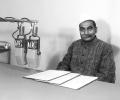
'The largest listenership for Vividh Bharati outside the country is in Spain.' 'The labourers who go there for the tomato-picking season feel cut off from their country and listen to Vividh Bharati to overcome their loneliness.'

'I played five different versions of Woh Subah Kabhie Toh Aayegi for Raj Kapoor, only to be greeted with a totally blank reaction.' 'Thereafter, for 40 minutes, he disappeared, leaving us baffled.' 'But when he emerged, he couldn't stop appreciating our efforts!' 'He said Sahir Ludhianvi's writing was sheer poetry and since all my five tunes were equally wonderful, he would leave it to my discretion to chose the final tune.' 'What could be greater appreciation for an artiste?'

IPOs worth Rs 50,000 crore including Hyundai, NTPC Green Energy and Swiggy are set to hit the market in late October or early November.

Pre-initial public offering (IPO) allotments have lost favour amid buoyancy in the market and increase in average float size this year. After hitting a record high in 2023, they have come to a halt, with just three companies opting for such placements totalling Rs 235 crore. This compares to eight deals worth Rs 648 crore during the same period of the previous year.

Palm Springs Fire Chief Paul Alvarado confirmed that the explosion was intentional, with the blast damaging multiple buildings across several blocks.

The Congress on Wednesday expelled former Madhya Pradesh MLA Laxman Singh, who is brother of ex-chief minister Digvijaya Singh, from the primary membership of the party for six years for 'anti-party activities'.
